Winter transforms Pakistan into a country of contrasts.
In the north, pine forests disappear beneath fresh snow, mountain valleys turn white, and temperatures can fall well below freezing. Meanwhile, destinations such as Karachi and Bahawalpur offer milder weather for travellers who would rather explore than shiver.
But planning a winter trip in Pakistan isn’t as simple as choosing the destination with the prettiest snowfall pictures.
Table of Contents
Some destinations are ideal for a family snow holiday. Others are beautiful but difficult to reach, especially during heavy snowfall.
So, what are the best places to visit in Pakistan in winter?
This GenWeather guide covers 15 destinations, from Murree and Malam Jabba to Hunza, Skardu and Karachi. You’ll discover where snowfall is most likely, the best months to travel, what to pack, and how to avoid common winter travel mistakes.
Whether you’re planning a December getaway, a January snowfall trip or a February holiday, here’s what you need to know.
Quick Comparison: Best Winter Destinations in Pakistan
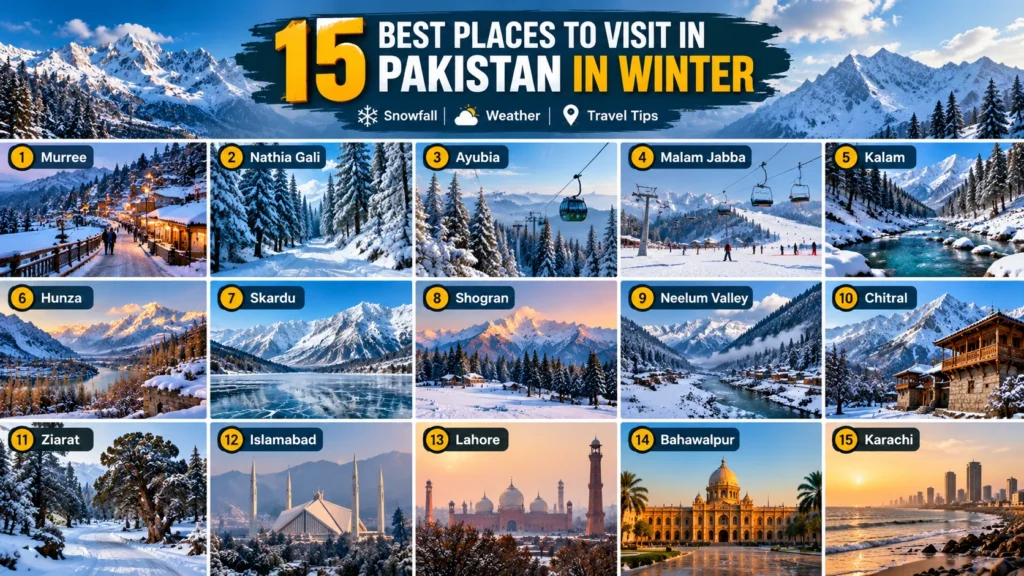
| Destination | Winter experience | Snowfall chances | Travel considerations |
|---|---|---|---|
| Murree | Classic hill-station holiday | Good during winter snow spells | Traffic and slippery roads |
| Nathia Gali | Snowy forests and mountain scenery | Good | Steep, icy roads |
| Ayubia | Pine forests and winter landscapes | Good | Trail and road conditions |
| Malam Jabba | Skiing and snow activities | Good | Resort access and weather |
| Kalam | Snow-covered valleys | Good, particularly higher areas | Road access can be difficult |
| Hunza | Snowy peaks and quiet villages | Variable in inhabited valleys | Extreme cold and long journeys |
| Skardu | Frozen landscapes and mountain views | Variable by elevation | Flight and road disruptions |
| Shogran | Snowy meadows and forest views | Good during snow spells | Jeep-road access can be restricted |
| Neelum Valley | Winter mountain scenery | Variable; higher areas snowier | Road closures and landslide risks |
| Chitral | Mountain culture and snowy scenery | Variable by location | Remote travel conditions |
| Ziarat | Juniper forests and possible snow | Possible | Cold nights and road conditions |
| Islamabad | Mild winter sightseeing | Rare in the city | Fog and occasional poor air quality |
| Lahore | Heritage and food tourism | Extremely rare | Smog and fog |
| Bahawalpur | Palaces and desert-edge sightseeing | Extremely rare | Cold desert nights |
| Karachi | Comfortable coastal winter | No typical snowfall | Marine and coastal conditions |
Snowfall chances describe general seasonal patterns, not a prediction for your travel dates. Snow depth, accessibility and weather can change quickly.
1. Murree: Best for a Classic Snowfall Holiday
Murree is one of Pakistan’s most popular winter destinations, especially for travellers from Islamabad, Rawalpindi and Punjab.
During winter snow spells, the town’s roads, rooftops and surrounding hills can become covered in snow. For many families, it’s the most familiar place to experience winter mountain scenery without planning a long northern expedition.
Best Things to Do in Murree in Winter
Explore Mall Road, enjoy mountain viewpoints, photograph snowy landscapes and visit nearby attractions when road conditions allow.
Patriata is another popular excursion, although transport services and road access depend on weather.
When Does It Snow in Murree?
December can bring early snowfall, while January and February often provide stronger opportunities to encounter winter snow conditions.
However, snowfall is never guaranteed on a particular date.
Winter Travel Tip
Murree’s popularity can become a disadvantage during major snowfall. Heavy traffic, limited parking, icy roads and sudden closures can disrupt trips.
Check weather warnings and official traffic advisories before departing. Avoid driving into the area during severe snow alerts.
Best for: Families, couples and first-time snowfall tourists.
2. Nathia Gali: Best for Snow-Covered Forests
Nathia Gali, in the Galiyat region, offers a quieter mountain atmosphere than central Murree.
Its pine forests, winding roads and surrounding hills can look spectacular after snowfall.
Winter temperatures are low, particularly at night, and snow or ice may remain on shaded roads and walking paths.
What to Do in Nathia Gali
Enjoy forest scenery, short walks where conditions are safe and mountain photography.
Longer hiking trails, including routes towards Mukshpuri and Miranjani, should not be treated as ordinary winter walks. Snow, ice, poor visibility and rapidly changing weather can make them hazardous.
Best Time to Visit
January and February can offer rewarding snowy scenery, depending on the season.
GenWeather tip: Confirm hotel heating, road access and parking arrangements before travelling.
Best for: Nature lovers and travellers seeking peaceful winter scenery.
3. Ayubia: Best for Pine Forests and Winter Photography
Ayubia is another attractive destination in the Galiyat region.
The surrounding forests and hills are especially beautiful when covered in fresh snow.
It’s a good option for travellers who enjoy nature and photography rather than busy commercial attractions.
Winter Activities in Ayubia
Take in forest views, enjoy scenic stops and explore only those walking areas confirmed safe and open.
The famous Pipeline Track may become slippery or unsafe in snow and ice. Never assume it’s suitable just because it’s accessible in summer.
Winter Travel Tip
Snow-covered roads can remain hazardous even after snowfall stops.
Carry warm clothing, wear footwear with reliable grip and avoid isolated routes during poor visibility.
Best for: Photographers, couples and short winter getaways.
4. Malam Jabba: Best for Skiing and Snow Activities
Malam Jabba, in Swat, is one of Pakistan’s best-known winter sports destinations.
Its mountain setting and established ski facilities make it particularly appealing to travellers who want more than sightseeing.
During suitable winter conditions, visitors may find skiing and other snow-related activities available.
Things to Do in Malam Jabba
Depending on weather and resort operations, activities may include skiing, enjoying mountain viewpoints and spending time at resort facilities.
Availability of ski lifts, equipment rentals and other attractions should be confirmed directly before travelling.
Best Time to Visit Malam Jabba
January and February are often attractive months for snow activities, but the ski season depends on actual snow coverage and operating conditions.
Winter Travel Tip
Reserve accommodation early for popular winter weekends, and check resort operations before departure.
Best for: Skiing enthusiasts, adventurous families and snow lovers.
5. Kalam Valley: Best for Deep-Winter Mountain Scenery
Kalam is famous for its rivers, forests and mountain landscapes.
In winter, the region can experience substantial snowfall, especially in surrounding higher areas.
Snow-covered villages and forests make it an attractive destination for experienced winter travellers.
But there’s an important difference between admiring Kalam in photographs and reaching it safely in January.
Is Kalam Accessible in Winter?
Access depends on snowfall, road clearance and current local conditions.
Some roads may become slippery or temporarily impassable. Remote attractions around Kalam can be much harder to reach than the main settlement.
What About Mahodand Lake?
Mahodand Lake should not be promoted as a routine winter sightseeing trip. Its access routes can become snowbound or otherwise unsafe.
GenWeather tip: Confirm the current road status with local authorities and reliable operators. Avoid travelling to remote valleys without appropriate transport and local expertise.
Best for: Experienced mountain travellers with flexible schedules.
6. Hunza Valley: Best for Snowy Peaks and Quiet Winter Villages
Hunza is beautiful throughout the year, but winter reveals a completely different side of the valley.
The famous mountain scenery remains, while tourist crowds often decrease and cold weather transforms the landscape.
Karimabad, Altit and other accessible settlements can provide memorable winter views.
Does Hunza Receive Snowfall in Winter?
Yes, snowfall occurs in the wider Hunza region, particularly at higher elevations.
However, snowfall in inhabited valley areas varies considerably. You might see snow-covered mountains without finding deep snow in the town itself.
What to Expect
Cold days, potentially freezing nights and weather-dependent road travel are important considerations.
Heating arrangements matter. Some smaller accommodations may offer limited winter services.
Important Travel Warning
High-altitude roads and passes should never be assumed open.
For travel towards Gilgit-Baltistan, verify the available route and current conditions. The Babusar route is not a dependable winter connection.
Best for: Photographers, mountain enthusiasts and travellers comfortable with cold weather.
7. Skardu: Best for Dramatic Winter Landscapes
Skardu is among Pakistan’s most visually impressive destinations.
Winter brings snow-covered mountains, freezing temperatures and striking contrasts between rocky landscapes and white peaks.
Some accessible areas around Skardu, Shigar and Kachura can be rewarding for winter photography.
Is Skardu Worth Visiting in Winter?
For the right traveller, absolutely.
However, it’s not the easiest destination for a spontaneous family holiday.
Flights may be delayed or cancelled because of weather, and long road journeys can become difficult.
Can You Visit Deosai in Winter?
Deosai is not a normal winter sightseeing destination.
Heavy snow and extreme high-altitude conditions typically make ordinary tourist access impractical.
Winter Travel Tip
Choose accommodation with reliable heating, carry sufficient warm clothing and allow extra days for potential travel disruption.
Best for: Serious photographers and experienced winter travellers.
8. Shogran: Best for Snowy Meadows and Mountain Views
Shogran is known for its beautiful meadows, forests and views of surrounding mountains.
When snowfall arrives, the landscape can become exceptionally scenic.
However, winter access is a major consideration.
Is Shogran Accessible During Winter?
Access depends on snowfall and the condition of the steep approach road.
At times, vehicle movement may be restricted or require specialised local transport.
Can You Visit Siri Paye in Winter?
Siri Paye should not be treated as a guaranteed winter excursion.
Snow and difficult terrain can make the route inaccessible or unsafe.
GenWeather tip: Confirm road conditions, accommodation availability and transport arrangements before booking.
Best for: Travellers seeking scenic snow landscapes who can adjust plans to conditions.
9. Neelum Valley: Best for Peaceful Winter Scenery
Neelum Valley in Azad Jammu and Kashmir offers rivers, forests and mountain scenery.
Winter can be beautiful, especially in areas where snowfall covers surrounding hills and villages.
But conditions vary considerably across the valley.
Lower-elevation settlements may be more accessible than remote upper-valley destinations.
Where Should You Go?
Choose destinations according to current road conditions, not simply their popularity in summer travel videos.
Remote locations such as Taobat can become inaccessible during winter.
Winter Travel Tip
Check official travel advisories and local road reports before entering upper-valley areas.
Avoid travelling during heavy precipitation or when landslide and avalanche warnings are active.
Best for: Nature lovers and travellers prepared for variable winter access.
10. Chitral: Best for Mountain Culture and Winter Scenery
Chitral offers a fascinating combination of mountain landscapes, cultural heritage and traditional communities.
Winter can be very cold, particularly in higher settlements.
Snowfall is possible across parts of the region, although conditions vary with elevation and location.
Things to Experience
Explore accessible areas around Chitral town, enjoy mountain views and learn about local culture.
Visits to Kalash valleys or more remote destinations require additional planning, especially during snow or icy road conditions.
Winter Travel Tip
Check access routes, tunnel and road conditions, and local weather before travelling.
Carry sufficient winter clothing and avoid relying on optimistic summer travel times.
Best for: Cultural travellers and visitors comfortable with remote mountain journeys.
11. Ziarat: Best for Juniper Forests and Possible Snowfall
Ziarat in Balochistan is an often-overlooked winter destination.
Known for its juniper forests and mountain setting, it offers a different winter experience from northern Pakistan.
Temperatures can become very cold, and snowfall is possible during suitable weather systems.
What Makes Ziarat Special?
Its forest landscapes, mountain atmosphere and heritage attractions offer a combination of nature and culture.
However, snowfall is not guaranteed, and winter road conditions can change quickly.
Winter Travel Tip
Confirm local road conditions and accommodation heating before travelling, particularly during cold waves.
Best for: Travellers seeking a less conventional winter destination.
12. Islamabad: Best for Comfortable Winter Sightseeing
Not every winter holiday needs snow.
Islamabad offers a more comfortable alternative for travellers who prefer sightseeing, restaurants and accessible nature attractions.
Winter days are often cool to mild, while mornings and evenings can be chilly.
Best Things to Do in Islamabad in Winter
Visit Faisal Mosque, explore Pakistan Monument, enjoy Saidpur Village and take in city views from accessible viewpoints.
The Margalla Hills can be attractive for hiking on suitable days.
However, winter fog, rain, poor visibility and occasional air pollution can affect outdoor plans.
GenWeather Tip
Check weather and daylight conditions before hiking, and avoid isolated trails in poor visibility.
Best for: Families, weekend travellers and people who prefer mild winter activities.
For more ideas, explore GenWeather’s Islamabad travel and Margalla Hills hiking guides.
13. Lahore: Best for Winter Food and Heritage Tourism
Lahore is one of Pakistan’s most culturally rich cities.
Its historic buildings, traditional food and vibrant streets make it appealing during cooler weather.
Winter temperatures are generally more comfortable for walking than during the summer months.
Best Things to Do in Lahore
Explore Lahore Fort, Badshahi Mosque, Shalimar Gardens and the Walled City.
Enjoy traditional food and visit cultural attractions when conditions are suitable.
The Important Catch: Winter Smog
Lahore experiences seasonal air pollution, often particularly severe during autumn and winter.
Smog can reduce visibility and pose health risks, even when the temperature feels pleasant.
Always check current AQI before planning prolonged outdoor sightseeing.
GenWeather tip: During severe pollution episodes, reduce outdoor exposure and follow official health guidance.
Best for: Food lovers, history enthusiasts and travellers who can adapt plans to air quality.
14. Bahawalpur: Best for Palaces and Desert-Edge Adventures
Bahawalpur is an excellent option for travellers who want to escape the intense summer heat of southern Punjab.
Winter brings more manageable daytime conditions for exploring historic attractions and surrounding landscapes.
Best Things to Do in Bahawalpur
Explore accessible heritage sites, admire historic architecture and consider a properly organised excursion towards the Cholistan Desert.
The region offers a very different experience from snowy northern Pakistan.
Winter Travel Tip
Desert nights can be surprisingly cold.
Carry warm clothing for evenings and choose experienced local operators for desert excursions.
Best for: History lovers, families and travellers seeking milder daytime weather.
15. Karachi: Best for a Warm Winter Escape
If you prefer pleasant coastal weather over freezing mountain temperatures, Karachi is a strong choice.
Winter generally brings more comfortable conditions for exploring the city compared with the hottest, most humid months.
Best Things to Do in Karachi
Explore cultural attractions, enjoy the food scene and visit accessible coastal areas.
Beach activities should always depend on marine conditions, local restrictions and safety guidance.
Why Visit Karachi in Winter?
The biggest advantage is the relatively comfortable climate.
While northern destinations may require heavy jackets and winter boots, Karachi often allows visitors to enjoy outdoor sightseeing with lighter clothing.
Best for: Families, food enthusiasts and travellers seeking a warmer holiday.
Where to See Snowfall in Pakistan During Winter
If snowfall is your main travel goal, destination choice matters.
Some places receive frequent winter snowfall, while others offer mainly views of snow-covered mountains.
Best Snowfall Destinations to Consider
For a relatively convenient snow holiday:
- Murree
- Nathia Gali
- Ayubia
- Malam Jabba
For adventurous winter scenery:
- Kalam
- Shogran
- Hunza
- Skardu
- Upper Neelum Valley
The second group generally requires more careful planning because road access and weather conditions can be challenging.
Remember that a destination’s reputation for snow does not guarantee snowfall on your chosen dates.
For the best chance of seeing fresh snow, check short-range weather forecasts rather than booking solely around historical averages.
Best Time to Visit Pakistan in Winter: December, January or February?
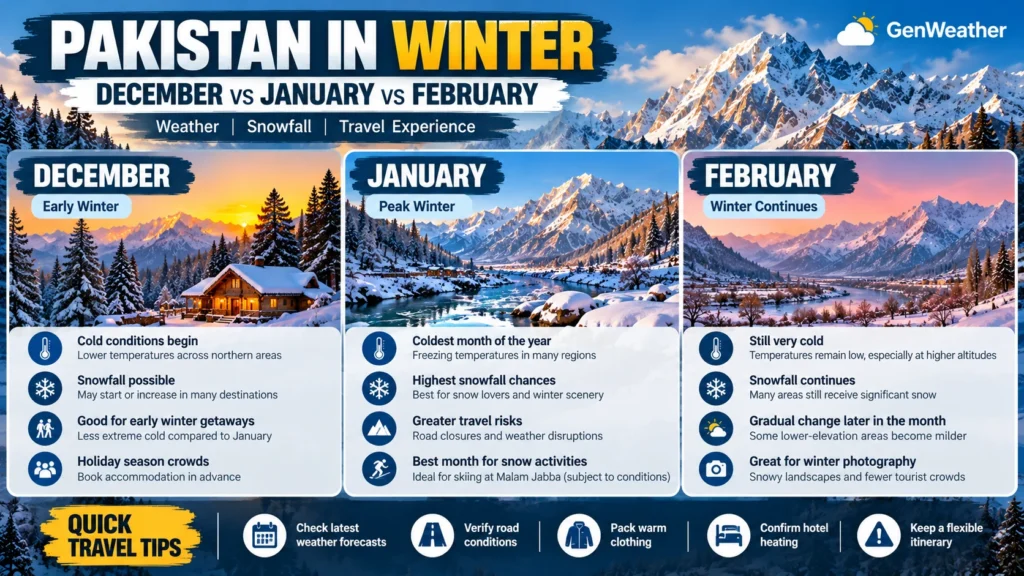
December: Early Winter and Holiday Travel
December marks the beginning of more established winter conditions in many northern destinations.
Cold temperatures become increasingly common, and snowfall may begin or intensify in mountain regions.
It’s a good month for travellers who want a winter atmosphere, although snowfall timing varies each year.
Holiday travel can increase demand for accommodation in popular destinations.
January: Peak Cold and Snowfall Opportunities
January is typically among the coldest months across much of Pakistan.
Northern destinations can experience significant snowfall and freezing temperatures.
This makes January attractive for snow lovers but also increases the risk of icy roads, closures and travel disruption.
February: Snowy Mountains and Gradually Changing Conditions
February can still bring substantial snowfall in northern regions.
Some lower-elevation destinations begin transitioning towards milder conditions later in the month, while high mountain areas remain firmly in winter.
February can be rewarding for winter photography, but access restrictions may continue.
Which Winter Month Is Best?
| Travel goal | Month to consider |
|---|---|
| Snowfall and winter scenery | January or February |
| Early winter getaway | December |
| Comfortable city sightseeing | December to February |
| Skiing at Malam Jabba | When snow coverage and resort operations permit |
| Mild coastal holiday | December to February |
| High-altitude adventure | Only when access, weather and safety conditions allow |
There is no single month that guarantees the best conditions everywhere.
Best Winter Destinations in Pakistan for Families, Couples and Adventure Travellers
Best for Families
Murree, Islamabad, Karachi and Bahawalpur can offer practical choices depending on the family’s preferred climate.
Malam Jabba may also be suitable when resort facilities and access are operating normally.
Best for Couples
Nathia Gali, Ayubia, Murree and Hunza offer scenic surroundings and memorable winter landscapes.
Accommodation heating and road conditions should be prioritised over appearance alone.
Best for Adventure Travellers
Kalam, Skardu, Hunza and Chitral can offer remarkable winter experiences.
However, these destinations require careful planning, appropriate equipment and a willingness to postpone travel during unsafe conditions.
Winter Travel Costs in Pakistan: What Affects Your Budget?
Winter travel expenses vary considerably by destination, transport type and weather conditions.
A short trip to Islamabad or Murree may be easier to budget than a multi-day journey to Hunza or Skardu.
The biggest cost factors include:
- Transport and fuel
- Accommodation and heating
- Food and sightseeing
- Snow activities and equipment rental
- Local drivers or specialised vehicles
- Unexpected extra nights caused by travel delays
Popular snowfall weekends can increase demand for hotels and transport.
Remote winter trips may also require additional spending on suitable vehicles and experienced local drivers.
Budget tip: Keep an emergency reserve instead of spending your entire travel budget on accommodation and activities.
What to Pack for a Winter Trip in Pakistan
Your packing list should match the climate and elevation of your destination.
For Snowy Mountain Destinations
Bring insulated layers, a warm waterproof or weather-resistant jacket, gloves, a hat, suitable boots and warm socks.
Waterproof footwear with good grip is especially useful in snow and slush.
For remote travel, carry essential medication, drinking water, snacks, a charged power bank and offline maps.
For Milder Winter Cities
Islamabad, Lahore and Bahawalpur generally require lighter winter clothing than high-altitude destinations.
However, mornings and evenings can still be cold.
For Karachi, lighter layers may be sufficient on many days, although conditions vary.
Additional Essentials
Carry identification, booking details, emergency contacts and any medication you need.
If driving in mountain regions, ensure the vehicle is roadworthy and appropriately equipped for the conditions.
Essential Winter Travel Safety Tips in Pakistan
Winter travel can be rewarding, but it should never be treated casually in mountainous areas.
1. Check Weather Forecasts Before Departure
Monitor the Pakistan Meteorological Department and official disaster-management advisories.
Pay particular attention to heavy snowfall, rain, fog and cold-wave warnings.
2. Verify Road Conditions
Do not assume a road is open because a navigation app displays it.
Confirm access with relevant authorities or reliable local operators before travelling.
3. Avoid Driving During Severe Snowfall
Snow, black ice and poor visibility can make mountain roads dangerous.
Follow official closures and avoid unnecessary travel during severe weather alerts.
4. Plan for Shorter Daylight Hours
Begin longer journeys early and aim to reach your destination before dark.
5. Confirm Hotel Heating
Ask whether your accommodation provides reliable heating and suitable bedding.
Never use charcoal, gas burners or generators indoors without proper safety arrangements. Carbon monoxide poisoning can be fatal.
6. Check Air Quality in Punjab
Winter smog can affect Lahore and other parts of Punjab.
Monitor AQI and follow health advisories before spending long periods outdoors.
7. Keep a Backup Plan
Allow flexibility for cancelled flights, closed roads and changes in weather.
A safe alternative destination is better than forcing a journey into dangerous conditions.
Winter Destinations in Pakistan You Should Approach With Extra Caution
Some famous northern attractions are frequently included in winter travel lists without explaining the access problems.
That’s misleading.
Naran and Babusar Pass
Naran’s upper approaches and Babusar Pass can become inaccessible because of winter snow.
Babusar Pass is a high-altitude route and should not be treated as a dependable December-to-February road connection.
Deosai National Park
Deosai experiences severe high-altitude winter conditions.
It is not a routine winter tourist destination, and ordinary road access is generally unavailable during the snowbound season.
Saif-ul-Muluk Lake
The route to Saif-ul-Muluk can become inaccessible or unsafe in winter.
Do not plan a standard family winter itinerary around reaching the lake.
Siri Paye
The high meadows above Shogran may be inaccessible because of snow and dangerous route conditions.
Remote Upper Valleys
Areas in upper Neelum, Swat, Chitral and Gilgit-Baltistan can face closures, avalanche hazards or extended travel delays.
Always distinguish between a destination being beautiful in winter and being safely accessible to ordinary tourists.
How to Plan Your Winter Trip With GenWeather
Good winter travel planning starts with the weather.
Before booking, compare destinations based on expected temperatures, precipitation, snowfall potential and travel accessibility.
Use GenWeather’s destination weather forecasts to check upcoming conditions.
For outdoor sightseeing, hiking or photography, explore the GenWeather Outdoor Activity Planner to identify more suitable weather windows.
You can also use the Best Time to Visit Calculator when comparing destinations and seasonal travel options.
Remember that weather forecasts cannot replace official road-closure notices or local safety instructions.
Make your winter trip planning easier with GenWeather’s free travel tools. Use our Outdoor Activity Planner to explore weather conditions for outdoor activities, or try the Best Time to Visit Calculator to compare destinations and seasonal travel options. Always verify official road advisories before heading into snowy mountain regions.
Frequently Asked Questions
What are the best places to visit in Pakistan in winter?
Murree, Nathia Gali, Ayubia and Malam Jabba are popular choices for winter scenery and snow activities. Hunza, Skardu and Kalam attract experienced mountain travellers, while Islamabad, Bahawalpur and Karachi offer alternatives for milder sightseeing.
Which place in Pakistan receives the most snowfall?
Snowfall varies by elevation, weather system and year. Higher mountain areas generally receive more snow than lower valleys, but identifying a single snowiest tourist destination requires comparable long-term measurements.
Which month is best for snowfall in Murree?
January and February are often good months to consider, although snowfall depends on actual weather conditions and is not guaranteed.
Is December a good time to visit northern Pakistan?
December can offer beautiful winter scenery, but freezing temperatures and snowfall may affect transport and accommodation. Choose accessible destinations and monitor forecasts.
Can tourists visit Hunza in January?
Yes, some parts of Hunza remain accessible, but travel can be affected by snow, icy roads and extreme cold. Confirm routes and accommodation before departing.
Is Skardu open for tourists in winter?
Skardu town can receive visitors in winter, but weather may disrupt flights and road travel. Some surrounding attractions are inaccessible during the season.
Is Naran open in December or January?
Naran’s access can be severely restricted during winter, and upper routes such as Babusar Pass are generally unsuitable for ordinary winter travel. Check official local road information before planning.
Where can families enjoy snow in Pakistan?
Murree, Nathia Gali, Ayubia and Malam Jabba are popular options, provided roads, accommodation and activities are operating safely.
Which place is best for a winter honeymoon in Pakistan?
Murree, Nathia Gali and Hunza can offer scenic winter settings. The best choice depends on weather, accessibility, budget and accommodation quality.
Where can I travel in Pakistan during winter without snow?
Karachi, Bahawalpur and Islamabad are worth considering for sightseeing without making snowfall the focus of the trip.
What is the coldest month in Pakistan?
January is generally among the coldest months in many parts of Pakistan, although local conditions vary significantly.
Is it safe to travel to northern Pakistan in winter?
Winter travel can be safe with appropriate planning and suitable conditions, but mountain routes may become dangerous or inaccessible during snowfall, ice, landslides and avalanche warnings. Always follow official advisories.
Final Thoughts: Which Winter Destination Should You Choose?
Pakistan offers extraordinary winter travel experiences, but the best destination depends on what you want from your holiday.
For a classic snowfall getaway, consider Murree, Nathia Gali, Ayubia or Malam Jabba.
For dramatic mountain scenery and a more demanding adventure, Hunza, Skardu and Kalam deserve attention.
For cultural attractions and relatively milder conditions, Islamabad, Bahawalpur and Karachi are excellent alternatives.
And if Lahore is on your list, remember that air quality matters just as much as temperature.
The best winter trip isn’t necessarily the one with the most snow. It’s the one you can enjoy safely.
Before travelling, check the latest weather forecast, verify road conditions and keep your itinerary flexible.
With thoughtful planning, winter can be one of the most memorable times to explore Pakistan.
Official Weather, Road Conditions & Winter Travel Safety Resources
Before travelling to Pakistan’s winter destinations, always consult reliable government sources for the latest forecasts and safety advisories. The Pakistan Meteorological Department (PMD) provides official weather forecasts and alerts, while the National Disaster Management Authority (NDMA) publishes warnings about severe weather and natural hazards. Travellers visiting Murree and other Punjab destinations should check the Punjab Provincial Disaster Management Authority (PDMA) for regional safety guidance. Those heading towards Swat, Kalam or Chitral can consult PDMA Khyber Pakhtunkhwa for local weather advisories and emergency updates. Before driving into mountainous regions, also verify current road conditions with the relevant highway authorities and local administration. Remember that snowfall, icy roads, fog and sudden weather changes can disrupt even well-planned winter trips.
Important Information & Image Disclaimer
Weather and Travel Information: The information provided in this GenWeather article is intended for general travel planning and educational purposes. Weather patterns, snowfall, temperatures, road accessibility and attraction availability can change without notice. Seasonal descriptions are based on general climate patterns and should not be interpreted as guaranteed forecasts. Before travelling, always check updated weather forecasts, official government advisories and local road conditions. GenWeather is not an emergency alert service.
Image Disclaimer: Some images and infographics featured in this article are AI-generated or digitally illustrated for visual and educational purposes. They are artistic representations and may not accurately depict the current appearance, geographical features, snowfall conditions or accessibility of specific destinations. Images should not be used as evidence of real-time weather or travel conditions.
Accuracy and Updates: We aim to keep our travel guides informative, accurate and useful. However, destination information, transport availability, seasonal conditions and safety recommendations may change over time. Readers should independently verify important details before making travel arrangements.
Questions, Feedback or Corrections?
Have a question about this guide, noticed information that needs updating, or want to suggest another destination for GenWeather to cover? We’d love to hear from you.
Please visit our Contact Us page to send a message directly to the GenWeather team.
Explore smarter. Plan around the weather. Travel with confidence.
© GenWeather. All rights reserved.